Winter Owls Watercolor Clipart for Embroidery
First Impressions: Translating Soft Art to Thread
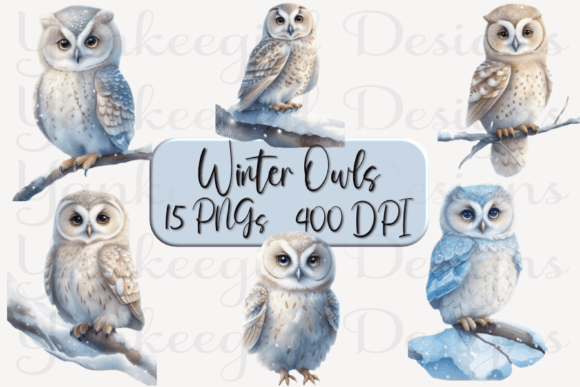
When I first opened the Winter Owls Watercolor Clipart collection, my immediate thought was not about how pretty the illustrations are on a screen, but how they will survive the digitizing process. As an embroidery designer and product reviewer, I look at digital assets through the lens of a needle and thread. Watercolor styles are notoriously tricky to translate into machine embroidery because they rely on soft edges and color blending that satin stitches and fill stitches naturally resist. However, this specific set of Illustrations strikes a promising balance between artistic whimsy and structural clarity.
The mood is undeniably cozy and nostalgic, evoking feelings of cabin life, holiday warmth, and quiet winter evenings. The visual personality leans towards vintage storybook aesthetics rather than modern minimalism. For a maker or Etsy seller, this is gold. It signals "handmade" and "personalized gift" immediately. But beyond the vibe, the shapes have distinct boundaries. This is crucial. If the owls were too washed out or lacked definition, creating a clean applique design or a crisp running stitch outline would be a nightmare. These designs possess enough contrast and shape integrity to serve as a reliable foundation for a commercial embroidery project or a cherished family heirloom.
Real-World Application: The Holiday Tote Bag Test
To truly evaluate these assets, I mentally placed them into a current client request: a series of premium canvas tote bags intended as bridesmaid gifts for a winter wedding. The client wanted something usable year-round but festive enough for the season. Winter Owls Watercolor Clipart fit the brief perfectly, but the execution required careful planning.
For this sweatshirt embroidery or tote bag design scenario, I opted to treat the clipart as a guide for a mixed-media approach. Pure watercolor simulation in thread can become bulletproof and dense. Instead, I used the clipart to create a hybrid design. I utilized a light fill stitch for the owl’s body to mimic the wash of color, preserving the fabric texture, and employed a darker running stitch to define the feathers and facial features. This maintained the softness of the original illustration while ensuring the finished product remained flexible and wearable.
The result was a sophisticated, boutique-quality item. Because the design has natural negative space and isn't overly cluttered, it allowed the cream canvas to breathe. This is vital for customer trust; buyers can tell the difference between a stiff, mass-produced patch and a thoughtful, professionally executed handmade product. For small shop owners, this versatility means one digital embroidery file can yield multiple revenue streams, from nursery decor pillow covers to custom apparel for holiday markets.
Navigating Fabric Variables and Technical Limits
While the aesthetic is forgiving, the technical application of Winter Owls Watercolor Clipart demands respect for fabric physics. Not every surface is a friend to watercolor-style embroidery.
- Textured Fabrics: On linen or burlap, the intricate details of watercolor shading can get lost in the weave. If you are making tea towels or aprons with heavy texture, simplify the design. Use the clipart as a silhouette for an applique design rather than attempting full-color replication.
- Stretchy Knits: For baby embroidery or sweatshirts, stitch density is your enemy. Watercolor effects often require high stitch counts to blend colors. On knit fabrics, this causes puckering and distortion. You must use appropriate stabilizer, specifically a cut-away mesh for stretchy garments, and consider reducing the density in your digitizing software before stitching.
- Dark Backgrounds: These illustrations likely assume a white or light background. Stitching them directly onto navy or black fabric without a white underlay base will muddy the colors and ruin the watercolor effect. Always test on a scrap of the exact dark fabric you intend to use.
- Small Hoop Sizes: Resist the urge to shrink these designs down to 2x2 inches for caps or pockets. Watercolor nuances disappear at small scales, turning into indistinct blobs. If you need a small embroidered patch, extract a single element, like the owl's face, rather than resizing the entire complex composition.
Commercial Value and Brand Consistency
For creative entrepreneurs and digital product sellers, consistency is key to building a recognizable brand. Winter Owls Watercolor Clipart offers a cohesive visual language that can tie together disparate products. Imagine listing a matching set of printable mockups, digital planner stickers, and physical embroidered ornaments in your Etsy shop. Using the same source Illustrations ensures your shop front looks curated and professional.
However, a word of caution regarding licensing and commercial use. Before selling finished items or incorporating these into digital design assets for resale, verify the specific license terms included with the file. Some licenses allow for physical product sales but prohibit using the art in digital templates or POD services. Confirming this protects your business and respects the original artist. When used correctly within legal bounds, these designs elevate the perceived value of your work. Customers associate detailed, artistic embroidery with higher price points compared to generic stock vectors.
Designer Notes: Pre-Stitch Checklist
Before you hoop up your good fabric, run through this practical checklist to ensure your Winter Owls Watercolor Clipart project succeeds:
- Print a Template: Never guess placement. Print the design at actual size to visualize scale on the garment or item. What looks balanced on a monitor may overwhelm a baby onesie or look tiny on a large blanket.
- Thread Color Audit: Watercolor relies on subtle variegation. Standard solid threads might look flat. Consider using variegated or matte finish threads to better replicate the painted texture. Test thread colors against the fabric in natural lighting, not just under machine lights.
- Stabilizer Strategy: Match the stabilizer to the end use. Wash-away toppers are essential for textured fabrics to prevent stitches from sinking. Tear-away is fine for stable cottons, but fusible mesh is non-negotiable for apparel that will be washed frequently.
- Density Check: Open the embroidery file in your software. If the stitch count seems excessively high for the size, adjust the density. A softer, more open fill stitch often mimics watercolor better than a dense satin block and saves thread.
- Mockup Testing: Create a black and white mockup of the design. If the owl reads clearly without color, the structure is sound. If it looks like a gray smudge, you need to increase contrast in the digitizing stage before committing to thread.
Ultimately, Winter Owls Watercolor Clipart is a versatile asset for the thoughtful maker. It bridges the gap between digital art and tactile craft, offering a unique opportunity to create emotionally resonant, high-value goods. Whether you are crafting a personalized gift for a loved one or stocking your shelves for the holiday rush, approaching these Illustrations with technical mindfulness will ensure the final stitched result is as beautiful as the digital inspiration.