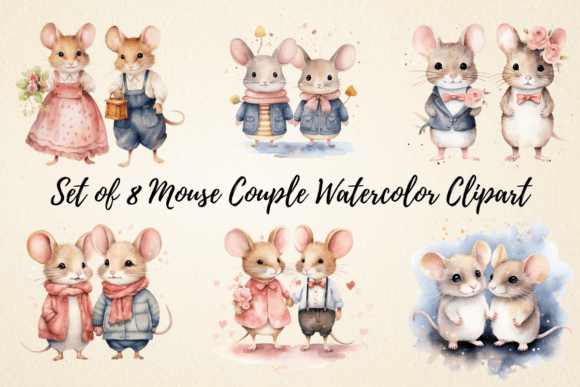
Mouse Couple Watercolor Clipart: Editorial Illustrations
When evaluating a new graphic design asset for an upcoming content calendar, my primary concern is always editorial versatility. As a digital publisher, I need visuals that do more than just fill white space; they must communicate tone, establish trust, and encourage clicks without overwhelming the text. Upon first reviewing the Mouse Couple Watercolor Clipart, the immediate impression is one of soft nostalgia and gentle storytelling. Unlike rigid vector art or overly polished 3D renders, this watercolor style introduces an organic texture that feels handcrafted and authentic. For bloggers and content creators in niches like children’s literature, parenting, cozy lifestyle, or seasonal storytelling, this aesthetic bridges the gap between professional web design and personal connection.
The mood created by these illustrations is distinctly warm and approachable. In a real publishing workflow, this matters significantly. Readers often decide whether to engage with content based on visual cues before reading a single headline. This clipart set signals safety, comfort, and whimsy, making it an ideal candidate for blogs focused on family activities, early childhood education, or creative hobbies. It avoids the sterile look of corporate stock photography while maintaining enough refinement to serve as legitimate editorial design rather than mere decoration.
Integrating Whimsy into Professional Content Workflows
In my daily work managing content sites, I constantly seek assets that can be repurposed across multiple platforms without losing their impact. The Mouse Couple Watercolor Clipart excels here because of its inherent flexibility. When designing a website header for a Valentine’s Day campaign or a spring reading challenge, these mice provide a focal point that anchors the layout without competing with navigation elements. The transparency and soft edges typical of high-quality watercolor files allow them to blend seamlessly into colored backgrounds or sit cleanly against white space.
For social media managers and affiliate marketers, this asset is particularly valuable for creating scroll-stopping Pinterest pin designs. Pinterest users respond exceptionally well to watercolor aesthetics because they imply creativity and human effort. By placing the mouse couple in the upper third of a vertical pin and pairing it with bold, readable typography, you create a visual hierarchy that guides the eye naturally toward your title. This same graphic can be resized for Instagram stories, newsletter headers, or Facebook post previews, ensuring consistent brand identity across channels.
Beyond standard blog graphics, this clipart serves as a foundational element for monetizable digital product creation. If you are developing a lead magnet such as a printable activity sheet, a coloring book, or a seasonal planner, these illustrations add perceived value. A plain PDF feels utilitarian; a PDF adorned with charming watercolor mice feels like a curated experience. This distinction is crucial for content marketing strategies where the goal is to build an email list or sell low-ticket items. The asset transforms a simple document into a desirable printable design that subscribers actually want to keep.
Enhancing Reader Trust Through Visual Consistency
Visual consistency is the bedrock of reader trust. When a website looks disjointed, readers subconsciously question the authority of the content. Using a cohesive set like Mouse Couple Watercolor Clipart helps establish a recognizable visual language. For example, if you use these mice for category thumbnails on a parenting blog, regular visitors will begin to associate that specific artistic style with your brand’s helpful, nurturing advice. This recognition speeds up navigation and deepens loyalty.
Furthermore, the quality of your design assets directly influences conversion rates in affiliate marketing. If you are reviewing children’s books or recommending craft supplies, generic clipart can make recommendations feel impersonal. However, integrating these specific watercolor illustrations suggests that a real person has curated the content with care. It softens the commercial intent of affiliate links, wrapping them in an editorial context that feels more like a friend’s recommendation than a sales pitch. This subtle psychological shift can improve click-through rates and overall engagement metrics.
Strategic Placement for Maximum Editorial Impact
Knowing where to place a creative design element is just as important as selecting it. Based on my testing, Mouse Couple Watercolor Clipart performs best in areas where emotional resonance drives action. Hero images for seasonal posts are a prime location. The artwork sets the stage immediately, telling the reader what kind of experience to expect. Similarly, these illustrations work beautifully as dividers between long-form content sections, breaking up dense text blocks and reducing cognitive load without jarring the reader out of the narrative flow.
They are also highly effective for Canva template creation. Many small business owners and educators lack advanced design skills but need professional-looking materials. Incorporating these mice into pre-made templates for worksheets, certificates, or social media posts provides instant polish. Because watercolor textures photograph and print well, they translate perfectly from screen to physical paper, making them ideal for hybrid digital-to-print workflows.
Navigating Limitations and Technical Considerations
While versatile, this asset requires careful handling to maintain professionalism. It should be used cautiously in contexts demanding high information density or strict corporate formality. On small mobile thumbnails, intricate watercolor details can become muddy or indistinct. Always test how the graphic renders at 150 pixels wide; if the mice lose their definition, opt for a simpler icon or solid color block instead. Additionally, avoid placing detailed text directly over the textured areas of the illustration. Watercolor washes can reduce contrast, harming accessibility and readability. Always ensure sufficient negative space exists between the artwork and your copy.
From a technical performance standpoint, file management is critical. Watercolor files can be large due to complex color gradients and transparency data. Before uploading to your CMS, compress the images using modern formats like WebP to preserve quality while reducing load times. Slow pages kill engagement, no matter how beautiful the modern design is. Also, verify the commercial license terms before using this asset in paid products or monetized environments. Licensing clarity protects your business and ensures ethical usage within the creative marketplace.
Publisher Notes for Real-World Application
To get the most out of this digital download, I recommend a systematic testing phase before full deployment. Preview the clipart inside your actual blog theme, not just in isolation. Check how it interacts with your specific font choices. Watercolor pairs exceptionally well with serif fonts for a classic storybook feel or clean sans-serifs for a contemporary educational look. Avoid overly decorative script fonts that might compete with the organic lines of the illustration.
- Contrast Check: Test the image in grayscale to ensure it remains distinct without color reliance.
- Mobile Audit: Verify that the focal point of the mouse couple isn't cropped awkwardly on phone screens.
- Typography Pairing: Try the asset beside both handwritten and display fonts to find the right balance of playfulness and legibility.
- Licensing Verification: Confirm rights for small business branding, especially if selling physical merchandise or digital templates.
- File Optimization: Run all assets through compression tools to maintain site speed scores above 90.
Ultimately, Mouse Couple Watercolor Clipart is more than just a cute picture; it is a strategic tool for visual communication. When applied with intention, it elevates blog graphics, strengthens digital guide offerings, and creates a cohesive atmosphere that keeps readers coming back. For publishers willing to invest time in proper integration and technical optimization, this asset offers significant returns in both aesthetic quality and audience connection.