Watercolor Foxglove Clipart for Embroidery
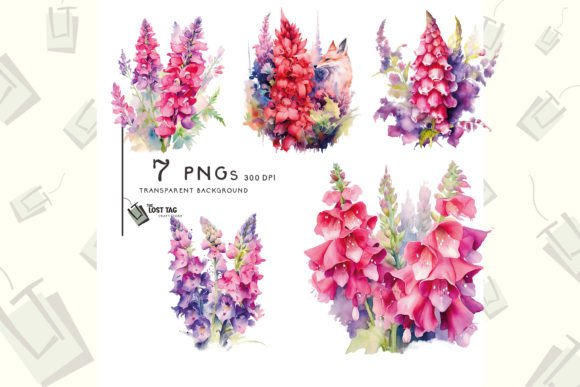
As a designer who spends just as much time behind an embroidery machine as I do in front of a computer screen, I approach digital assets with a healthy dose of skepticism. When evaluating Watercolor Foxglove Clipart Sublimation for potential adaptation into stitch work, my first question is never about how pretty it looks on a monitor. My question is always: will this translate to thread without losing its soul? Botanical illustrations are a staple in the handmade product market, but the transition from pixel to stitch requires careful judgment. This specific foxglove artwork carries a soft, romantic aesthetic that suggests immediate applications for nursery decor and cottagecore apparel, yet it demands respect during the digitizing or printing process to avoid looking muddy or stiff.
First Impressions and Visual Personality
Upon opening the file, the mood is undeniably gentle. The watercolor style offers organic gradients and soft edges that differ significantly from traditional vector art. For an embroidery designer, this is both a blessing and a challenge. The shape of the foxglove stalk is naturally vertical, which creates an elegant line perfect for placement along a sleeve, down the side of a tote bag, or centered on a tea towel. However, the "watercolor" aspect implies color blending that standard satin stitches cannot replicate alone. As an illustration asset, it feels high-end and boutique-ready, avoiding the cartoonish look that plagues many floral designs. It possesses a visual maturity that appeals to adult customers seeking sophisticated custom apparel rather than juvenile craft projects.
Real-World Application: The Linen Tea Towel Test
To truly evaluate this asset, I mentally placed it in a real production scenario: creating a premium linen tea towel for a small shop product line. Tea towels require a balance of absorbency and beauty, making them the perfect canvas for botanical themes. In this context, Watercolor Foxglove Clipart Sublimation serves two distinct paths. If using direct-to-garment sublimation on poly-linen blends, the design retains every subtle wash of color, resulting in a vibrant, photorealistic finish that sells well in online listings due to its visual pop in printable mockups.
However, if adapting this for a machine embroidery design, the strategy shifts. I would not attempt to replicate the watercolor effect entirely with thread. Instead, I would use this clipart as a guide for a hybrid approach. The main flower bells could be rendered in light fill stitches with varying densities to mimic shading, while the stems utilize running stitches for a sketch-like quality. Alternatively, this artwork works beautifully as a background reference for an applique design, where fabric pieces form the base and the digital print adds the intricate inner details. This method preserves the delicate nature of the foxglove while ensuring the finished product has the tactile texture customers expect from embroidery.
Navigating Fabric Choices and Stabilizer Needs
The success of this design hinges entirely on substrate selection. Watercolor aesthetics rely on contrast and clarity. On dark fabrics, the translucent nature of watercolor gets lost unless you employ a heavy white underlay or switch to a bleached background. For sweatshirt embroidery, the fleece texture can swallow fine details. If stitching this onto a crewneck, you must increase stitch density and perhaps simplify the outer edges of the petals to prevent them from sinking into the nap. Conversely, on lightweight baby clothes or gauze muslin, the design’s vertical weight could cause puckering. Here, a lightweight cut-away stabilizer is non-negotiable to maintain the integrity of the bloom shapes without adding bulk against sensitive skin.
For those using this strictly for sublimation on commercial embroidery blanks like polyester caps or performance wear, be mindful of heat press temperatures. Watercolor gradients can sometimes band or shift if the pressure isn't even across the curved surface of a hat. Always test on a scrap piece of the exact material before committing to a full production run for your Etsy seller inventory.
Where Caution is Required
While versatile, Watercolor Foxglove Clipart Sublimation is not immune to technical pitfalls. Small hoop sizes are a significant risk area. Reducing a complex watercolor botanical to a 2-inch patch size often results in a loss of definition; the flowers may merge into indistinguishable blobs. If you intend to create an embroidered patch, verify that the petal separation remains visible at scale. Additionally, tiny lettering paired with this design should be avoided. The organic, flowing lines of the foxglove clash with rigid, microscopic text. If personalization is required, opt for a clean, sans-serif font placed discreetly away from the detailed floral elements to maintain legibility and brand consistency.
Stretchy fabrics also present a challenge. Because watercolor art lacks hard outlines, any distortion caused by fabric stretch becomes immediately apparent as a blur. Unlike bold logo embroidery where slight warping might go unnoticed, a soft floral image looks wrong if the proportions are pulled. Use adequate hooping tension and consider a fusible backing for knits to lock the grain in place before stitching or pressing.
Enhancing Product Value and Customer Trust
Using high-quality illustrations like this signals professionalism. Customers can distinguish between generic clipart and curated design assets. When this foxglove artwork is executed correctly—whether through precise color matching in sublimation or thoughtful digitizing for thread—it elevates the perceived value of the item. A personalized gift featuring this design feels bespoke and artistic rather than mass-produced. For creative entrepreneurs, maintaining this level of quality builds trust. Buyers return because they know your baby embroidery won’t look pixelated and your holiday gifts won’t fade after one wash.
Furthermore, consistent use of cohesive botanical themes helps establish a recognizable brand identity. If your shop features this foxglove alongside other compatible watercolor florals, you create a collection that encourages multiple purchases. The visual harmony translates directly to buyer engagement and higher average order values.
Essential Notes for Makers and Sellers
Before listing any item derived from Watercolor Foxglove Clipart Sublimation, adhere to these practical checkpoints:
- Verify Licensing: Never assume commercial rights. Confirm specifically whether you can sell finished physical products, digital embroidery files, or both. Licensing terms vary wildly between designers.
- Test Stitch-Outs: Always run a test on the actual fabric you plan to sell. Screen colors do not match thread colors. Adjust your palette physically, not just digitally.
- Check Contrast: View your mockups and test stitches in black and white. If the design loses readability without color, the values need adjustment. Good embroidery relies on value contrast as much as hue.
- Stabilizer Matching: Do not use tear-away on stretchy knits for this design; the residue will distort the soft watercolor edges upon removal. Invest in proper cut-away or wash-away options.
- Mockup Accuracy: Ensure your printable mockup represents the true scale and placement. Misleading size representation is a top cause of returns for Etsy sellers.
- Wash Testing: If selling tea towels or baby items, wash your sample three times. Watercolor sublimation should hold, but embroidered versions need to be checked for thread shrinkage or color bleeding.
Ultimately, Watercolor Foxglove Clipart Sublimation is a beautiful asset that bridges the gap between digital art and tangible craft. Whether you are digitizing it for a custom denim jacket or pressing it onto a polymer-coated tumbler, treat the source material with technical respect. Understand its limitations regarding size and texture, and leverage its strengths in mood and elegance. By doing so, you transform a simple digital file into a profitable, cherished handmade product that stands out in a crowded marketplace.